
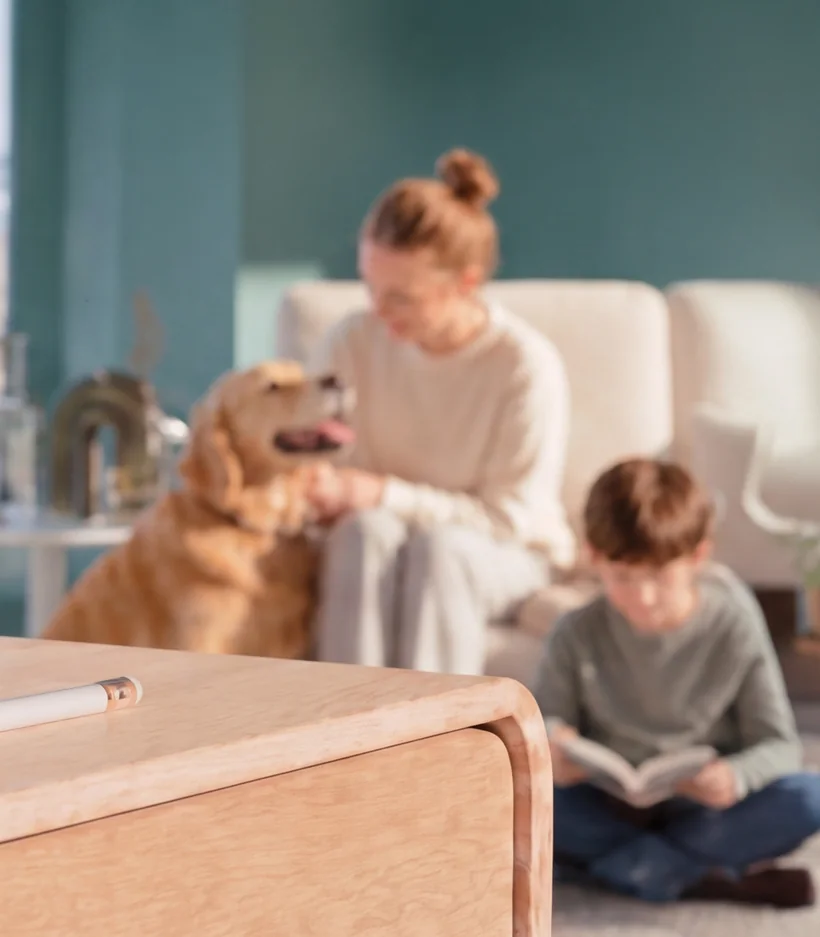
“How was school? What did you learn? Did you eat lunch? Who did you play with?” Each question can come from care. All four at the doorway can feel like a second school day. An after-school check-in can start with a welcome and an invitation that a child may take later.
The American Academy of Pediatrics recommends calm conversations, room for pauses and simple open questions. The doorway example below is original; it is not a clinical technique or a promise that a child will share more.
Start by making room for the transition
In this fictional scene, Sam comes home carrying a backpack and a paper folder. Their caregiver Lee wants to know about school but can see Sam is still putting things down. Lee says, “Welcome home. Would you like a snack first, or would you rather tell me about your day now?”
Sam says, “Snack.” Lee does not treat that as a refusal to connect. They put out what is available and let Sam settle. A child may want a quiet moment, a walk, a game or a conversation while doing something else. The offer is about timing, not a reward for disclosing information.
| If your child says... | A possible adult response | What it leaves open |
|---|---|---|
| “Nothing happened.” | “Okay. I'm glad you're home.” | They can talk later. |
| “I don't want to talk yet.” | “All right. I'll be around after snack.” | They choose when to return. |
| “Something was annoying.” | “Want to tell me which part?” | They choose how much detail to share. |
These lines are examples, not a script to recite. Some children communicate more easily while drawing or walking; others want direct conversation. You know the routines and access needs of your child better than a generic article does.
Ask one question you can actually listen to
Later, Lee can ask, “Was there one part of today you want me to know about?” If Sam describes a hard moment, Lee can listen before proposing a fix: “That sounds frustrating. Do you want help thinking about it, or do you mainly want me to hear it?” If Sam says no, Lee can stop.
Questions about schedules still matter. A permission slip, pickup change or deadline may need an answer today. Keep that practical question separate: “I need to know whether the trip form came home, so we can return it. We can talk about the rest of the day later.” This makes clear why the adult is asking and does not turn logistics into an emotional test.
Avoid promising complete secrecy if a child tells you something that needs adult action. If they describe danger, harm or a concern you cannot handle alone, get appropriate help from school staff, a pediatrician or local emergency services as the situation calls for. An ordinary check-in is not a substitute for care when a child needs it.
Leave a reliable way back
Lee might finish with, “I'll be making dinner if you want to come back to that story.” Then Lee can be available at the time they named. If family schedules make that impossible, choose a time you can keep instead. The invitation is enough; no reminder should pressure Sam to report feelings on a schedule.
If another adult will do pickup tomorrow, share only what the next caregiver needs: perhaps “Sam likes ten quiet minutes after getting home.” Sam's private account of a school conversation should not become a family-wide status update without a reason. For the logistics of coordinating several children, see after-school activity coordination; this page is about how to greet and listen to one child.
Tonight's first step can be as small as replacing a string of questions with “Welcome home” and one real choice about when to talk. A quiet answer can still be an answer.